Happy Spring from the Nutrition Team!
In the spirit of new beginnings and growth we are starting a new tradition: Recipe of the Month. Each month we will feature a new recipe highlighting paricular fruits and vegetables that are abundant in the season. We aim for the recipes to be simple, using easily accessible ingredients and minimal equipment. The goal is to demonstrate that it does not have to be complicated, time-consuming, or expensive to make foods that are both delicious and nutritious.
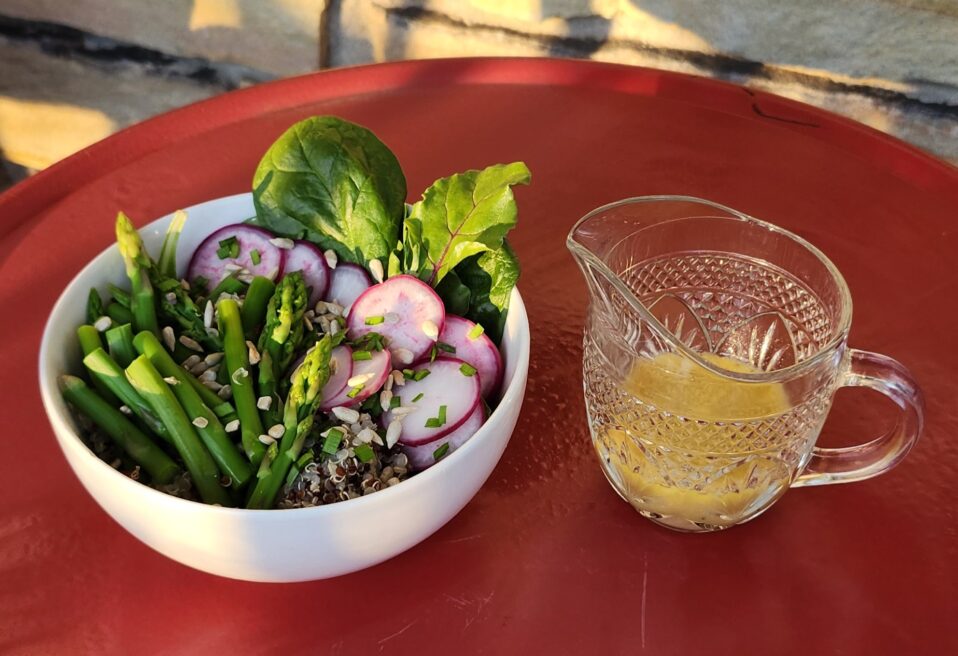
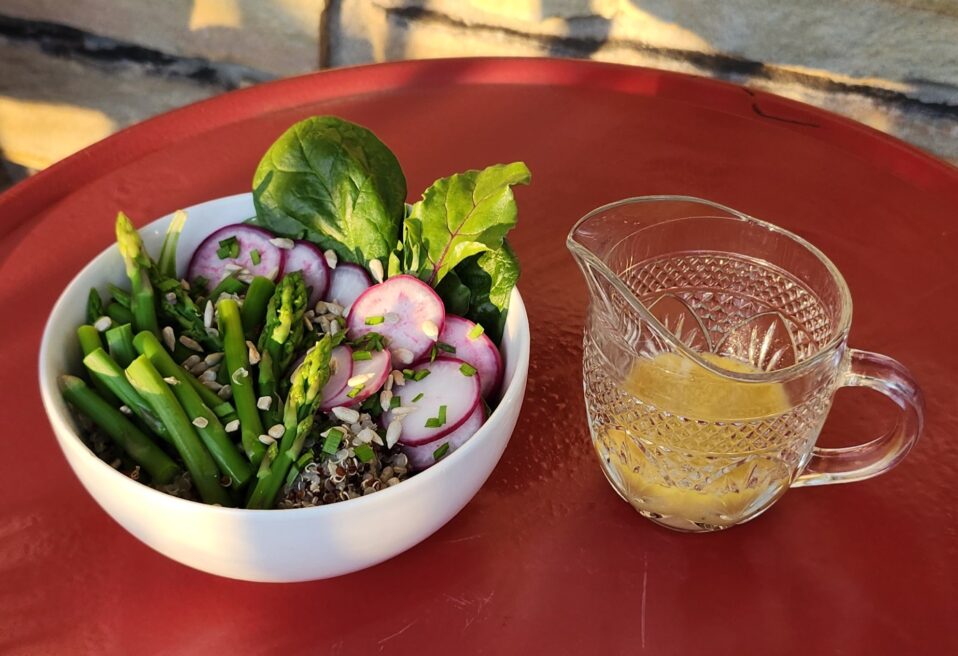
If you have been waiting patiently for the first fresh, local vegetables of Spring, then you are not alone. Here at Rolling Harvest, we are anxious to cook up the last of our storage potatoes, carrots, and turnips and begin feasting on Spring favorites. We have incorporated a few of these favorites in April’s Recipe of the Month, the Spring Greens and Grains Bowl. This versatile dish features leafy greens, asparagus, and radishes, all of which contribute their own dynamic taste and nutrition benefits. Combined with grains of your choice (a great use for leftovers!) and topped with optional nuts, seeds, or beans and a bright apple cider vinaigrette, the Spring Greens and Grains Bowl will delight your tongue and nourish your body.
Let’s dive into the nutritional nitty gritty of the recipe. First and foremost, this bowl is packed with fiber from the grains, vegetables, and any of the optional toppings. Fiber is crucial for gut health, helps control blood sugar levels, and can be protective against cardiovascular disease and even some cancers. Guidelines recommend women eat 28 grams of fiber every day and men 35 grams, but most Americans eat only half of the recommended amount. For perspective, eating one serving of this recipe without any of the optional toppings provides 8 grams of fiber. Adding ¼ cup of beans would give you another 4 grams of protein. With this one meal you could meet 1/3 to ½ of your daily fiber recommendations!
Beyond fiber, the Spring Greens and Grains bowl is loaded with vitamins, minerals, and healthful plant chemicals called phytochemicals. Salad greens are high in vitamins A, C, and K, as well as the mineral magnesium. Asparagus is a nutrition powerhouse! This flavorful stalk is not only loaded with vitamins A, C, K, and folate, but is also a plant source of iron. Similarly, radishes are rich in vitamin C, as well as the minerals calcium and potassium. The combination of nutrients in this recipe, from vitamins and minerals, to fiber, to plant-based protein will help you meet your nutritional needs for good health. The bonus is that it tastes fresh and zesty too, like Spring in a bowl!
We look forward to sharing more recipes and nutrition information with you every month, and we hope you enjoy a taste of fresh home cooking.
With warmth from our kitchen to yours,
The Rolling Harvest Nutrition Team










 Cathy Snyder, founder and executive director of the organization for the last 13 years, retired effective Jan. 1 of this year.